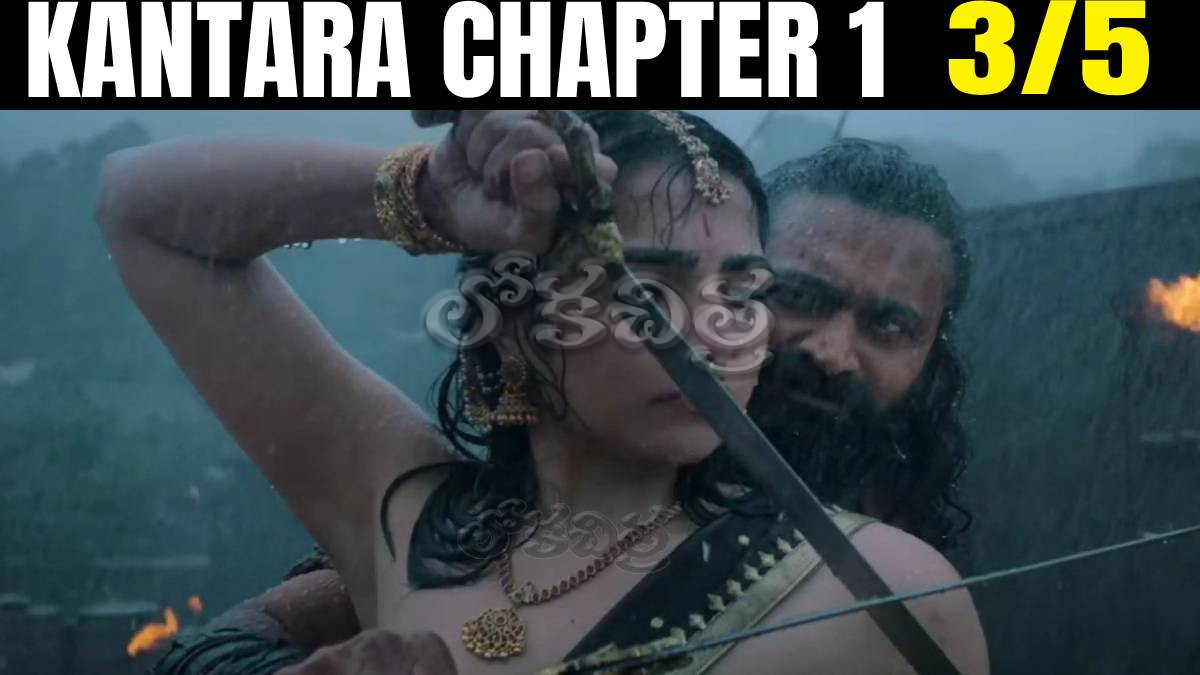

Kantara Chapter 1 Review (Rating: 3/5)
Movie Name: Kantara Chapter 1
Movie rating: 3/5
Cast:
Rishab Shetty (Berme)
Rukmini Vasanth (Kanakavathi)
Gulshan Devaiah (Kulasekhara)
Jayaram (King Rajashekara)
Supporting Cast:
Pramod Shetty, Rakesh Poojari, Prakash Thuminad, Deepak Rai Panaje, Hariprashanth M G, Shaneel Gautham, Naveen Bondel.
Cinematographer: Arvind S. Kashyap
Music director: B. Ajaneesh Loknath
Editing: Suresh Mallaiah
Producer: Vijay Kiragandur, Chaluve Gowda
Written & Directed by:Rishab Shetty����
Kantara Chapter 1, After the phenomenal success of Kantara (2022), the prequel arrives amidst immense expectations as fans anticipated a deeper dive into mythological folklore, daivas origins, and the roots of ancestral conflict in the legendary forests of Kantara. Despite slower advance bookings compared to other big releases, it is still one of 2025’s most hotly awaited films, especially with its global release timed for Dussehra and Gandhi Jayanti. The grand scale and narrative ambitions set the stage for another theatrical spectacle, aiming to answer mysteries left by the original film.
Story:
Set centuries before the original, Kantara Chapter 1 narrates the origins of the myth, tracing the clash between Kantara’s tribal leader Berme and the ambitious Bangra kingdom under King Kulasekhara.
As Berme and his tribe defy established power, they confront royal forces, struggle for their sacred land, and unleash the divine, with the film weaving themes of oppression, resistance, and ancestral spirituality through gripping folklore and spiritual elements.
Analysis:
Kantara Chapter 1 stands out for Rishab Shetty’s commanding performance, deeply rooted in myth and emotion.
Rukmini Vasanth embodies Kanakavathi with strength and subtlety, given more depth than female roles in the original film. Jayaram and Gulshan Devaiah add gravitas, with Gulshan’s portrayal of the wayward prince particularly impactful. The film excels during intense moments—especially the interval and climactic sequences—which deliver genuine goosebumps.
Nevertheless, the narrative is uneven: the pacing is inconsistent and some sections feel overly information-heavy, making the plot convoluted at times. The film rewards patience with a spectacular payoff, but the journey includes several draggy patches.
Technical analysis:
Technical brilliance is a highlight. Arvind S. Kashyap’s cinematography is stunning, expertly blending natural settings with elaborate set pieces; night scenes, action blocks, and mythic sequences are visually breathtaking.
B. Ajaneesh Loknath’s Carnatic-infused soundtrack supplies the heartbeat of the film, elevating divine sequences and fight scenes with nuance and emotional heft.
The editing by Suresh Mallaiah keeps the visual rhythm propulsive, though the film’s slow pacing does occasionally detract from immersion.
VFX is exceptional, especially in rendering divine spirits and forest creatures, with fire sequences and CGI animals standing out. Production and costume design weave an authentic period atmosphere.
Positive:
- Outstanding performances (Rishab Shetty, Rukmini Vasanth) Authentic mythological and folkloric depth
- World-class cinematography and visuals
- Impressive VFX, especially in climactic scenes
- Powerful score blending Carnatic and tribal rhythms
Negative:
- Slow, uneven pacing in the first half
- Overstuffed narrative, with sections that feel exposition-heavy
- Female agency better than last time, but still subject to traditional tropes.
- Occasional visual excess not matched by storytelling depth.
Overall:
Kantara Chapter 1 offers a satisfying mythic experience, best enjoyed for its technical excellence and spiritual spectacle.
While the script struggles with pacing and clarity, the visual and auditory impact is tremendous, and the climactic sequences are unforgettable.
The performances anchor the film, making it a theatre-worthy ride for fans of Indian folklore cinematics.
Bottom line:
A visually ambitious, spiritually resonant prequel that delivers awe and goosebumps, but is held back by uneven writing and sluggish moments.
Watch it for the spectacle and performances, but expect less narrative finesse than the original.
About The Author