
Ramayana 2026 Premiere Public Opinion: Namit Malhotra, Om Raut’s own Ramayana fails infront Sage Valmiki?; Yash Roocky Bhai in Ravan?; Parallel screenplay of Rama and Ravan looks like long Trailer of Ramayana Part 2? :
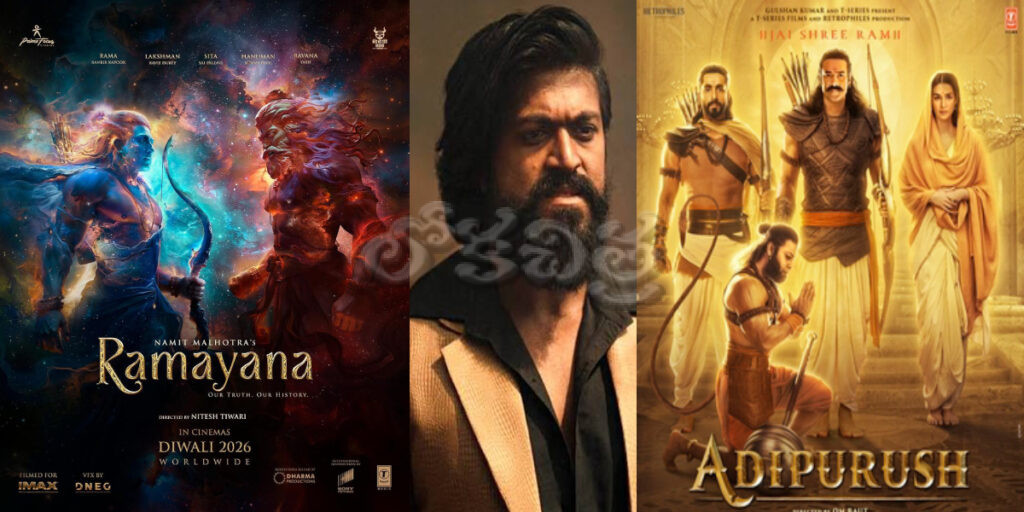
Ramayana (2026) Premiere Public Opinion: Namit Malhotra, Om Raut’s own Ramayana fails infront Sage Valmiki?; Yash Roocky Bhai in Ravan?; Parallel screenplay of Rama and Ravan looks like long Trailer of Ramayana Part 2?
Ramayan (2026) Public Review: Grand Visuals, But Does the Story Live Up to Valmiki’s Epic?
Editorial note: This is a critical assessment based on early premiere reactions reported on October 28, 2026 in Social Media, and the concerns outlined in this article. It is not a full theatrical review or a verified consensus rating. Wider audience response may differ after the film’s November 5 release.
Ramayana (2026), produced by Namit Malhotra and directed by Nitesh Tiwari, has begun attracting attention after its Los Angeles premiere. The first reactions present a divided picture: some viewers are impressed by its production scale, elaborate sets, visual effects and ambition, while others question whether the storytelling, emotional depth and music rise to the stature of the epic attributed to Sage Valmiki.
The central question is not whether the film looks expensive. It is whether its spectacle serves the story—or whether the story has become a lengthy prologue to the conflict promised in the next instalment.
Ramayana (2026) Premiere Reactions: Grandeur Wins, Storytelling Faces Questions
Several early responses have praised the film as an immersive visual event, with its scale inviting comparisons to major international fantasy productions. Other reactions have been more reserved, suggesting that extended action passages and uneven pacing can weaken the emotional momentum. The early response is therefore mixed rather than a settled verdict.
Reports from ThePrint and Telugu360 similarly describe praise for the scale alongside questions about narration and musical impact. These are initial reactions, not a substitute for a full review after release.
Is the Film a Spectacular Trailer for Part Two?
One of the strongest criticisms emerging from the early discussion is that the first instalment can feel like an extended setup for the next chapter. If the central dramatic conflict is deferred for too long, viewers may leave admiring the production while feeling that the film has not delivered a complete emotional journey of its own.
A two-part adaptation naturally needs room to build characters and establish the stakes. But a first chapter still needs a compelling dramatic arc, carefully judged pacing and a satisfying sense of progression. A cliffhanger can create anticipation; it cannot, by itself, replace narrative fulfilment.
Parallel Storytelling: Rama and Ravana Need Clear Dramatic Balance
Intercutting the journeys of Rama and Ravana can create a rich thematic contrast between duty, ambition, righteousness and power. Yet parallel storytelling requires clarity. If the film shifts between the two tracks without sufficiently strong transitions or a clear dramatic hierarchy, audiences may struggle to follow the narrative’s emotional centre.
The challenge is not simply to give both characters screen time. It is to ensure that each strand deepens the central conflict and that the audience understands why each scene matters to the larger story. The final assessment will depend on how effectively the film connects these parallel arcs.
Yash as Ravana: A Powerful Screen Persona or the Shadow of Rocky Bhai?
Yash’s presence is one of the most discussed aspects of the early reactions. His commanding screen persona can be an asset for Ravana, a character who requires formidable authority and charisma. The creative challenge, however, is transformation: audiences should encounter Ravana as a distinct mythological figure, not simply recognise the star’s familiar screen image.
If the performance leans too heavily on the swagger associated with Rocky Bhai, the character risks feeling like a variation on an established persona rather than a fully realised interpretation of Ravana. The distinction between star power and characterisation will be crucial when the wider audience sees the film.
Ranbir Kapoor as Rama: Appearance Is Only One Part of the Portrayal
Playing Rama demands more than visual resemblance or a composed screen presence. The role calls for moral clarity, compassion, restraint and an emotional authority that feels earned rather than imposed. Comparisons with earlier portrayals, including the enduring cultural memory of Arun Govil’s Rama, are inevitable, but every new interpretation must ultimately be judged on its own dramatic conviction.
Some early viewers have praised Ranbir Kapoor, while other reactions suggest that the film’s emotional and devotional register may not consistently match its visual ambition. The decisive test is whether the performance makes Rama’s choices and inner strength resonate beyond the spectacle.
Sai Pallavi and the Responsibility of Casting Sita
Sai Pallavi brings a distinctive screen presence to a role carrying enormous cultural significance. Whether the portrayal fully captures Sita’s dignity, strength, grace and emotional complexity is a matter for audiences to assess after release. Some audience says Sai Pallavi perfect match for Ravana’s Sister Surpanaka than Mata Sita. Casting debates should focus on the characterisation and performance visible on screen, rather than reducing an actor to a dismissive comparison with another role.
A. R. Rahman’s Music: Does the Score Deliver the Required Spiritual Elevation?
The music has drawn mixed responses in the early discussion. For a story of this cultural and emotional magnitude, the score needs to do more than underline action or amplify scale: it must create atmosphere, spiritual resonance and an emotional bridge between the characters and the audience.
Some listeners may prefer a more immediately memorable melodic approach, while others may value an expansive orchestral sound. The fair question is whether the music serves the scenes and leaves a lasting emotional impression. A definitive judgment should wait until audiences have experienced the complete film in theatres.
Adipurush vs Ramayana: Which Adaptation Better Serves the Epic?
Om Raut’s Adipurush remains a relevant comparison because it also demonstrated how a mythological film’s visual ambition can become inseparable from debate over writing, characterisation and tone. It would be premature to declare one adaptation categorically superior on the basis of a premiere alone.
The more meaningful comparison is not simply about which film looks grander. It is about which version makes the characters emotionally legible, builds a coherent screenplay, respects the weight of the source material and converts spectacle into drama. A film can be technically ambitious yet dramatically underwhelming; equally, a less elaborate production can succeed through clear writing and performances that connect.
Ramayana (2026) Early Assessment: 2/5 — An on Average of Public Social Media Rating
Ramayan (2026) Early Review Rating an on Average rating assessment is 2/5 for the concerns discussed here, not an average of all premiere audience ratings. The production scale and visual ambition merit attention, but the questions surrounding narrative momentum, parallel storytelling, musical impact and the balance between spectacle and emotional substance prevent an unqualified recommendation at this stage.
This is an early editorial judgment based on limited premiere feedback and is subject to revision after the film’s public release. It should not be read as a verified audience consensus or as a substitute for a full review of the released version.
Final Verdict: Wait for the Theatrical Audience
Ramayana arrives with immense expectations and an ambition rarely attempted at this scale. Its sets, visual design and production values may deliver the big-screen spectacle audiences seek. But the lasting measure of a retelling of Valmiki’s epic will be the clarity of its storytelling, the humanity of its characters and the emotional power of its central conflict.
For now, the early reactions suggest a film whose grandeur has made an impression, while its narrative choices remain open to debate. The wider theatrical response after November 5 will provide a more reliable basis for deciding whether Ramayana has achieved a compelling balance between spectacle and story.
Ramayana 2026 review, Ramayan review, Ramayana premiere reactions, Ramayana movie review, Ramayana 2026 audience review, Ranbir Kapoor Ramayana, Yash as Ravana, Sai Pallavi as Sita, Ramayana vs Adipurush, Namit Malhotra Ramayana, Nitesh Tiwari Ramayana.
Ramayana 2026 review
What is the early review of Ramayana (2026)? LokaChitra’s provisional assessment recognises the film’s grand visuals and production scale while raising questions about screenplay, pacing, characterisation and music. This is an editorial assessment based on limited premiere reactions, not a final theatrical review or a verified audience consensus.
Ramayan movie review 2026
For readers searching for a Ramayan movie review in 2026, the central question is whether the film’s visual ambition is matched by emotionally engaging storytelling. The full public-release version should be assessed on its complete narrative, performances, music and overall theatrical impact.
Ramayana 2026 premiere reactions
Early Ramayana 2026 premiere reactions have been mixed: some viewers praise the scale, sets and visual presentation, while others question the storytelling and musical impact. Premiere comments represent an early snapshot and may not reflect the wider response from audiences across India, including Telugu-speaking viewers.
Ramayana 2026 screenplay review
This Ramayana 2026 screenplay review focuses on narrative clarity, pacing and the parallel presentation of Rama and Ravana. The key question is whether both storylines build toward a coherent dramatic conflict, and whether Part One feels satisfying in its own right rather than only setting up the next instalment.
Ramayana vs Adipurush
Ramayana vs Adipurush is a comparison between two different mythological adaptations, not a claim that they share the same director. Ramayana (2026) is directed by Nitesh Tiwari, while Adipurush was directed by Om Raut. A fair comparison should consider screenplay, characterisation, tone, music and how effectively visual spectacle serves the story.
About this assessment: LokaChitra’s coverage from social media public reaction is intended for readers looking for Ramayana 2026 review updates, premiere reactions and screenplay analysis. The provisional 2/5 rating reflects this article’s public point of view of the concerns discussed above; it is not a Google rating, a critic-score average or a claim about all audience reactions. LokaChitra give it’s genuine opinion as gives regular may be updated after the theatrical release and says whether premiere Audience are correct or wrong will be share opinion after the release








Leave a Reply